

ROOF GUIDANCE
Why Roofs Fail Early
And why your ceiling stain is never where the problem started.
Water doesn’t leak where it enters — it travels. It moves along rafters, pools on top of drywall, and shows up on your ceiling three feet from where it got in. By the time you see it, the damage has usually been building for months.
Google Reviews
5.0 – 38 Reviews
Workmanship
20-Year Warranty
Maryland License
MHIC 147572
Owner-Led
Evaluations
VA Class “A”
2705183873
A Leak Is Not the Beginning.
It’s When the Roof Can’t Hide It Anymore.
Most homeowners assume a roof fails when it’s 20–25 years old. But age is only one factor. The roofs we see fail early — sometimes within 10–12 years — almost always have one thing in common: they were installed at the surface without addressing the full system.
Ventilation was never balanced. Flashing was skimped at transitions. Valleys were detailed incorrectly. Pipe boots were left in place. None of this is visible from the street. None of it shows up until water has already found a path.
” The parts that are easiest to skip during installation are usually the first ones that fail.”
— Rafael, Owner, Rebel Roofer
Most roofs that fail early weren’t neglected — they were just never built as a full system. Ventilation unbalanced. Flashing skimped. Pipe boots left in place. None of it visible until water finds a path.
A leak is not the beginning of a roof problem. It is the moment the system can no longer hide it
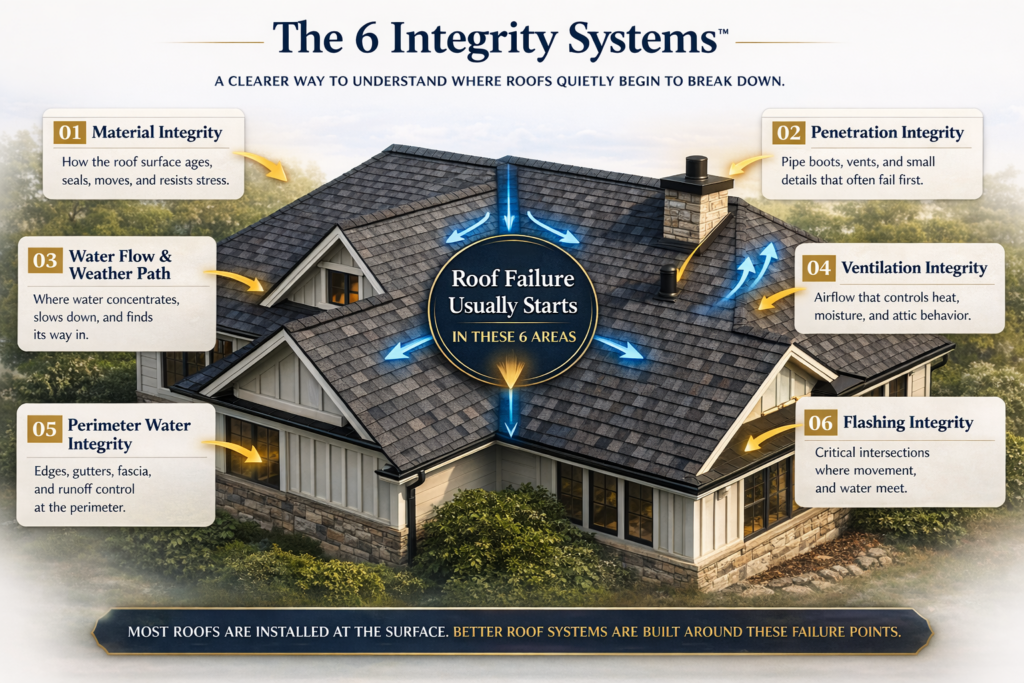
THE 6 INTEGRITY SYSTEMS
Where Roofs Actually Begin to Fail
A roof isn’t just shingles. It’s six interconnected systems — and most early failures trace back to weakness in one or more of them.
A roof is not just a surface. It is a system — and most failures begin in these six areas.
Water Flow & Weather Path
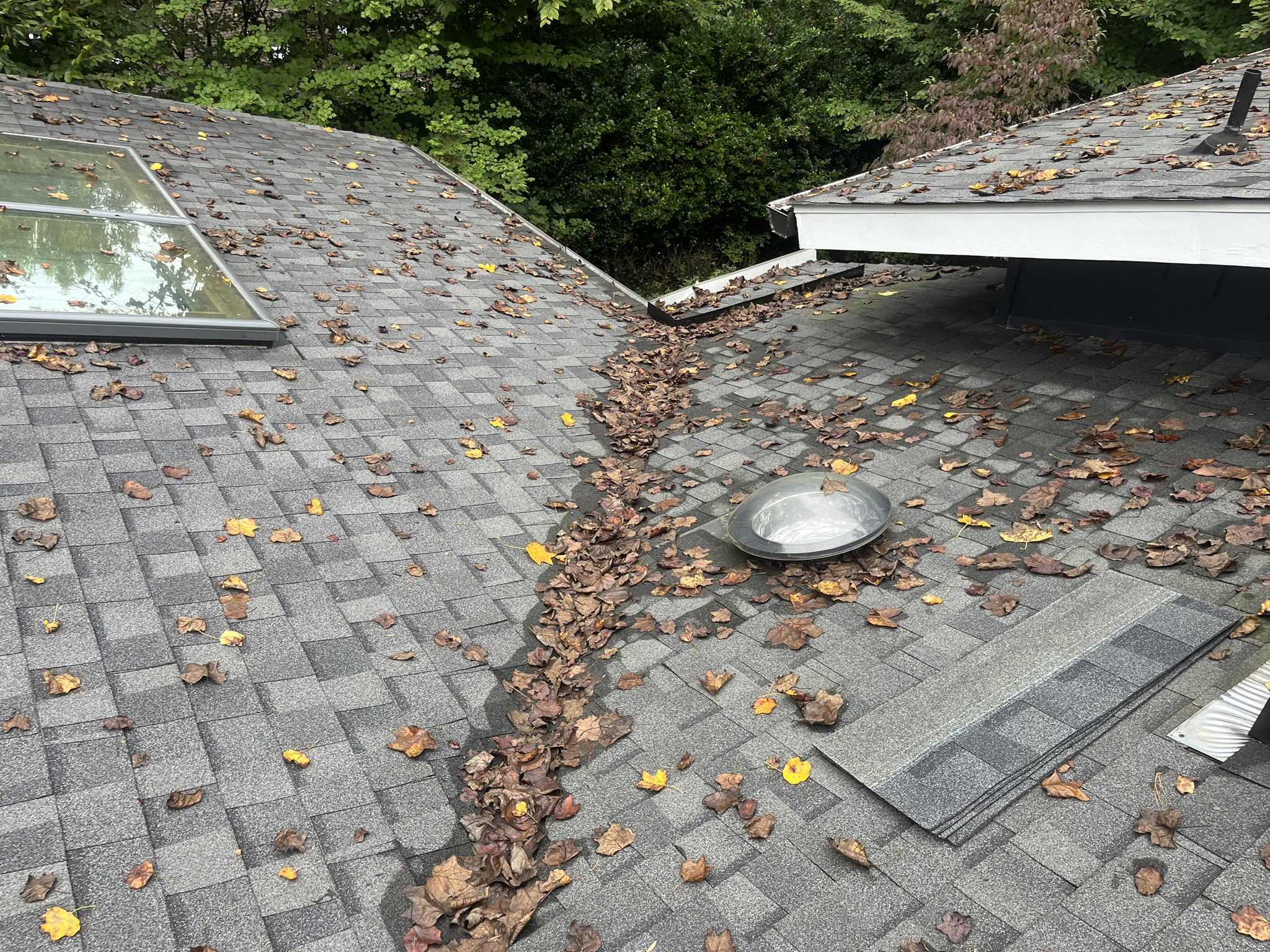
VALLEYS & WATER PATHS
Valleys are the highest-volume water zones on any roof. Where two planes meet, water concentrates. Small detailing errors — misaligned flashing, inadequate underlayment, improper overlap — redirect moisture underneath the surface before any shingle shows visible damage.
⚠ A valley can look clean from the ground while water has been channeling under the surface for over a year.
Flashing Integrity
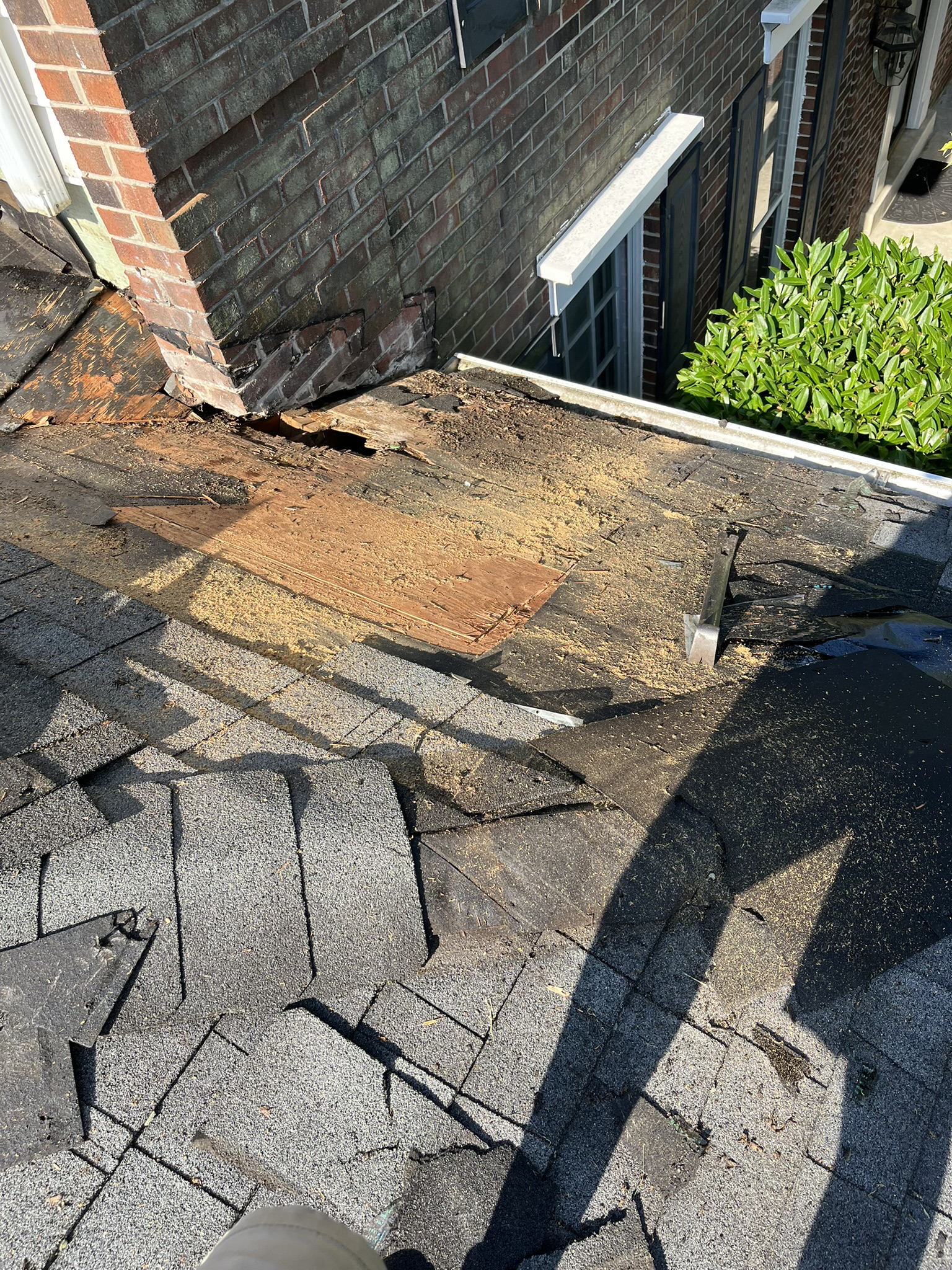
CHIMNEYS, WALLS & TRANSITIONS
Wherever different materials or roof planes meet — at chimneys, dormers, skylights, and sidewalls — there is constant thermal movement. Metal and roofing materials expand and contract at different rates. Over time, thin or improperly installed flashing separates, allowing slow water intrusion that spreads silently before it appears inside.
⚠ Flashing failures almost never announce themselves with a visible drip. They show up months later as staining or rot.
Ventilation Integrity
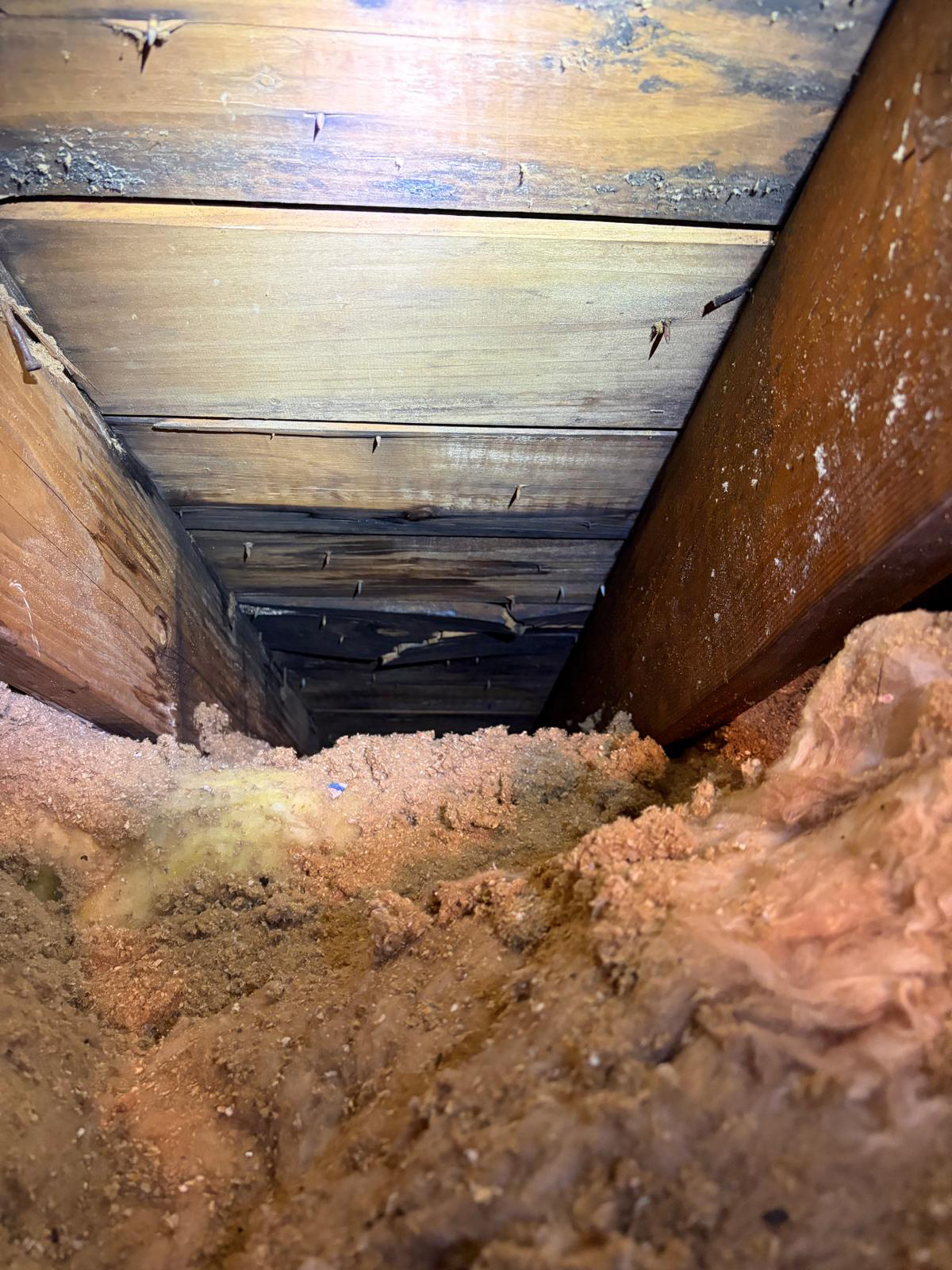
ATTIC AIRFLOW BALANCE
The attic isn’t separate from the roof — it’s part of it. When intake (soffit) vents and exhaust (ridge) vents are not balanced, heat and moisture get trapped. This accelerates shingle aging from below, degrades adhesive strips, and causes moisture to build in the deck. The roof can still look pristine while aging twice as fast internally.
⚠ Poor ventilation is one of the most commonly overlooked causes of premature roof failure — and one of the most preventable.
Penetration Integrity
PIPE BOOTS & VENT FLASHINGS
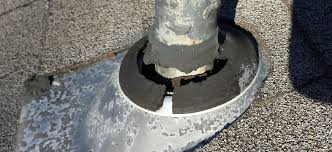
Every pipe, vent, and exhaust penetration that exits through the roof is sealed by a rubber boot or metal flashing collar. Rubber pipe boots typically last 10–15 years before they crack, separate, or deteriorate. Most roofers replace shingles without replacing old pipe boots — leaving the most failure-prone components in place on a new roof.
⚠ A new roof with 12-year-old pipe boots is not a new roof system.
Perimeter Water Integrity
PERIMETER WATER & DECK INTEGRITY
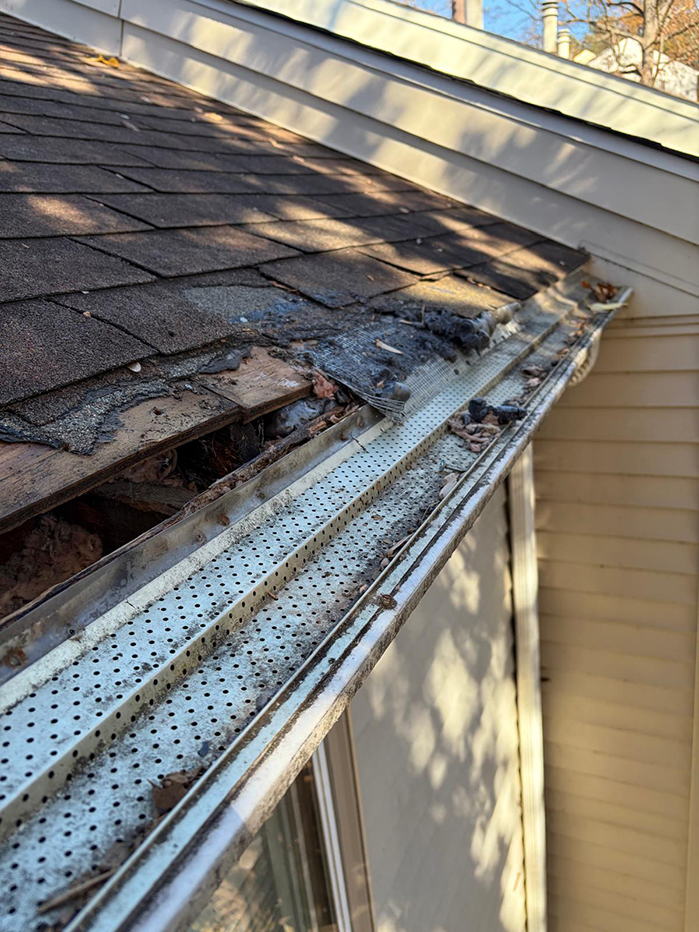
Roof edges are where water is supposed to leave cleanly. When drainage is restricted or edge details are incomplete, water backs up at the perimeter — stressing the exact point the roof should be releasing it.
What makes this worse: the deck is right there. Soft spots, delamination, or missing ice-and-water shield are invisible until the surface comes off. By the time perimeter water has been backing up for a season, the decking underneath is often already compromised.
Edge wear looks minor from the ground. The damage to fascia and decking beneath rarely does.
Material Integrity
SHINGLE & MATERIAL SELECTION
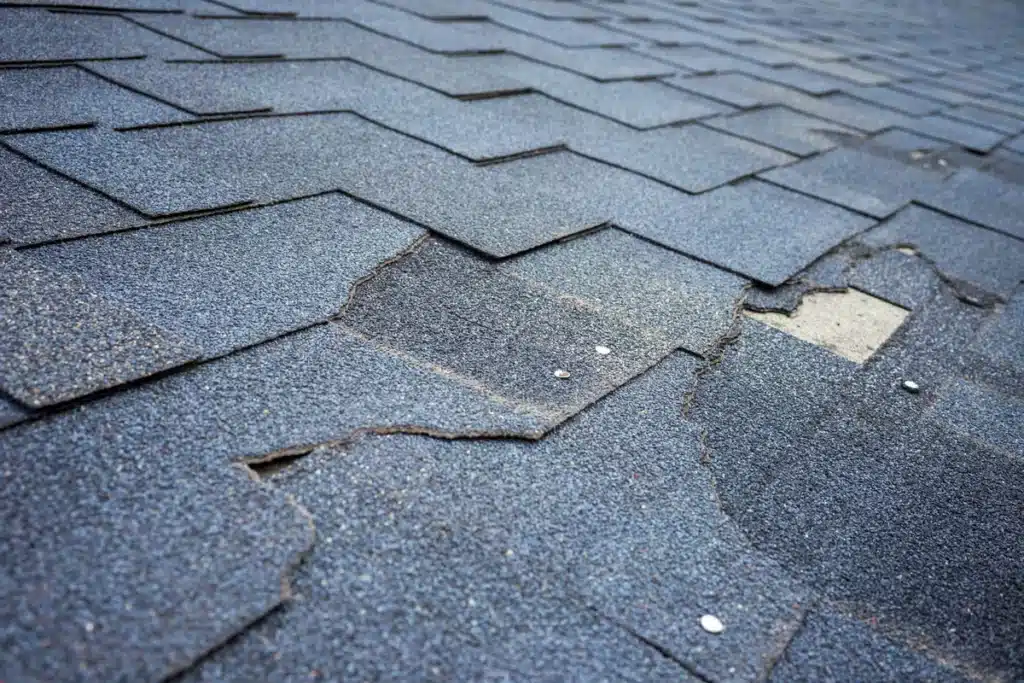
Standard fiberglass shingles are engineered to minimum thresholds. SBS-modified shingles — the polymer-modified products we spec on every replacement — stay flexible under thermal stress, resist wind uplift better, and maintain granule adhesion longer. The material choice has a direct effect on how the entire system performs over time, especially in climates with freeze-thaw cycles and summer heat spikes.
Shingles may still appear flat and okay, even while sealing strength and overall resilience are declining.
WHY SOME ROOFS LAST – AND OTHERS DON’T
Most roofs are installed at the surface. Better roof systems are built around where failure actually begins.
WHAT TO LOOK FOR What you see vs. What It Actually Means
Surface symptoms are easy to misread. Here’s what common warning signs typically point to underneath.
| What you see | What it usually means | Urgency |
|---|---|---|
| Water stain on ceiling | Flashing, pipe boot, or valley issue — often well above where the stain appears | High |
| Curling or lifting shingles | Poor ventilation, aged shingles, or deck moisture — often all three | Moderate |
| Granules in gutters | Heavy loss signals advanced wear or shingle failure | Moderate |
| Daylight in attic | Gaps at penetrations, ridge, or ridge cap — active leak risk | High |
| Moss or algae growth | Moisture retention from poor drainage — cleaning alone won't fix it | Monitor |
| Ice dams in winter | Heat escaping from the attic — ventilation problem, not a shingle problem | Moderate |
| Soft spots on the roof | Deck deterioration from long-term moisture intrusion | High |
| No symptoms — roof 12+ years old | Pipe boots and flashing sealants may be approaching end of useful life | Proactive |
Roofing decisions are simpler than most make them.
Here’s an honest framework
REPAIR MAKE SENSE WHEN
- The roof is under 15 years old and damage is isolated — one flashing failure, one pipe boot, one valley issue
- The deck and ventilation are sound and the problem has a clear, containable cause
- You’re 3–5 years from a planned replacement and want to extend performance without a full investment now
REPLACEMENT MAKES SENSE WHEN
- The roof is 18+ years old and showing multiple system weaknesses at once
- Repairs have been done repeatedly in the same areas without resolving the underlying cause
- Ventilation, deck condition, or flashing integrity have deteriorated to the point where surface repairs no longer hold
WAIT AND MONITOR MAKES SENSE WHEN
- The roof is performing well with no active issues and a proactive evaluation confirms the system is sound
- You’re 2–3 years out and want a clear picture before budgeting
A good evaluation tells you which category you’re in — without pressure toward any of them. See the full Repair or Replace guide →
THE INSPECTION PROBLEM
A quick walk-on doesn’t tell you how a roof system is performing. It tells you what’s visible from the surface — which is rarely where failure begins.
01
NO ATIC ACCESS
Ventilation problems, deck moisture, and heat buildup are only visible from inside the attic. Most inspectors never go in.
02
SYMPTOMS WITHOUT CONTEXT
A stain on the ceiling could trace back to three different locations on the roof. Without following water paths, the fix misses the source.
03
COMPONENTS LEFT UNCHECKED
Pipe boots, flashing sealants, and ridge condition are easily overlooked — but often where failure has already begun.
04
BUILT TO SELL, NOT TO DIAGNOSE
Most roofing companies run inspections as sales calls. The evaluation ends when they decide what to pitch — not when they actually understand the condition of the roof.
How Everyday Conditions in Maryland Affect Roof Performance Over Time
Your Roof Takes a Hit Every Single Year — Most Homeowners Don't Know Until It's Too Late
Freeze-thaw cycles, summer heat, heavy rain — Maryland puts continuous pressure on every seal and transition point a roof has. Most roofs don’t fail in one storm. They fail because small stresses quietly add up until the system can’t recover.
By the time it shows up inside your home, it’s been happening for a while.
BETHESDA, POTOMAC, ROCKVILLE, CHEVY CHASE
Why Roofs Fail Quietly in Bethesda, Rockville & Potomac
Homes in this area deal with heavy tree coverage, shade, and moisture retention that most roofs weren’t detailed to handle long-term. Add Maryland’s freeze-thaw winters and humid summers — and the weak points in a roof system show up faster than most homeowners expect.
Roof failure here is rarely one event. It’s the result of small details that were never addressed compounding quietly over years.
Not all shingles handle these conditions the same way. SBS-modified shingles stay flexible under thermal stress, hold their seal longer, and outperform standard fiberglass in exactly this climate.

AREAS WE SERVE
- Bethesda
- Potomac
- Chevy Chase
- Rockville
- North Bethesda
- Montgomery County
COMMON QUESTIONS HOMEOWNERS ASK
CLEAR ANSWERS, NO PRESSURE — Straightforward guidance to homeowners in Bethesda and Montgomery County move forward with confidence.
Most of the damage we find during evaluations is happening well before any interior leak appears. If your roof is 10+ years old, or if you’re seeing granule loss, minor lifting, or ice dam activity — an evaluation gives you a clear picture before you’re dealing with an emergency.
Standard asphalt shingles are rated for 25–30 years but commonly underperform in Maryland’s climate due to freeze-thaw stress, summer heat, and humidity. SBS-modified shingles tend to hold up significantly better. System quality — ventilation, flashing, deck condition — has more impact on lifespan than the shingle rating alone.
That depends on age, remaining material performance, deck condition, and how the system components are holding up — not just on what’s visible from the ground. Every evaluation includes our honest read on what makes sense for your specific situation. See the full Repair or Replace guide →
Most roofing visits are built around one goal — sell a replacement as fast as possible. Ours aren’t. Rafael evaluates the full system: deck, ventilation, flashing, penetrations, valleys, and material condition. You get a detailed photo report and a straight answer — including if the straight answer is “you don’t need anything right now.”
Rafael Huguet, Owner of Rebel roofer walks the roof and inspects the attic personally. He documents condition with photos, assesses all six integrity systems, and gives you a clear written summary of what’s happening and what — if anything — needs to be done. No bait-and-switch, no pressure.
OWNER-LED EVALUATION
A proper evaluation tells you how your roof is actually performing. Rafael evaluates every roof personally — detailed photo documentation, honest assessment, clear recommendation. No pressure toward a sale if it isn’t warranted.
* Clear findings * Honest Guidance * No Pressure