

INSPECTION PROTOCOL
THE 21-POINT ROOF INSPECTION
Most roofers glance at your shingles and hand you a quote. We walk every job personally — from ground-level structural read to attic moisture check — before a single recommendation is made.
21 Inspection Points
6 Inspection Zones
Owner-Led Evaluation
VA Class A #2705183873
MHIC 147572
A real inspection protects a real investment
WHY IT MATTERS
Your roof is the most consequential surface on your home. A missed pipe boot, undetected attic moisture, or improperly flashed valley doesn’t announce itself — it compounds silently until the damage is expensive and disruptive.
The 21-point inspection exists because there’s no shortcut to certainty. Each point targets a known failure mode, informed by years of roof-over-roof experience and architecture training that most roofing contractors simply don’t have.
The result: you get an honest, complete picture of your roof’s condition — not a sales pitch disguised as an inspection.
“A roof doesn’t fail at the shingles. It fails at the details — at every penetration, transition, and edge that water finds before you do. The inspection is about finding those spots first.”
OWNER & LEAD INSPECTOR, REBEL ROOFER
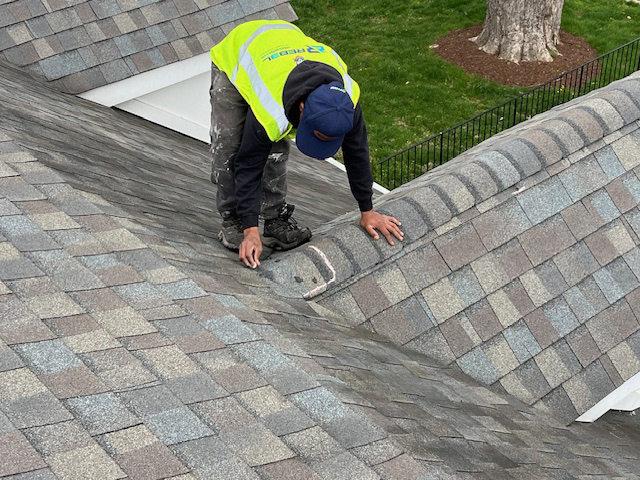
ALL 21 INSPECTION POINTS
ZONE 01 – EXTERIOR & STRUCTURAL
STRUCTURAL INTEGRITY FROM GROUND
Before stepping foot on the roof, our years of experience read the roofline from grade. Sagging ridges, uneven slopes, and visible racking reveal structural issues no shingle replacement can fix.
CONDITION OF ROOFING MATERIALS
A full surface-by-surface read of your existing shingles or roofing material — granule loss, cracking, missing tabs, and end-of-life indicators — assessed honestly, not with a sales agenda.
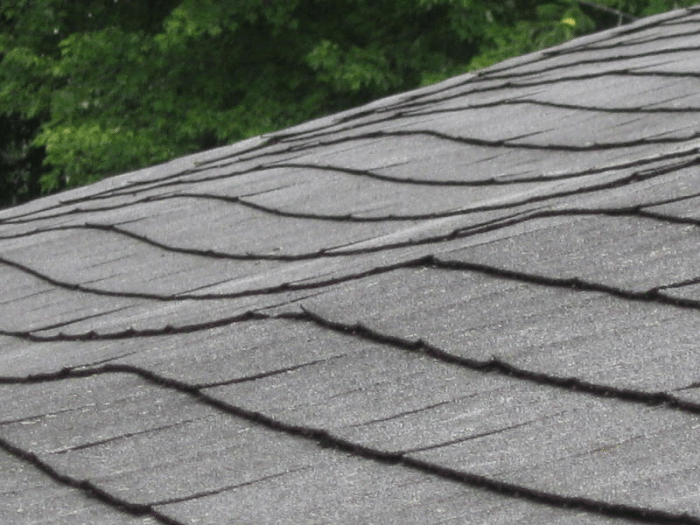
WAVINESS
Surface undulations across field areas often signal moisture in the decking or improper installation. Subtle waviness gets caught from the correct angle — not missed because someone went straight to the problem area.
WEAK DECKING
Soft spots underfoot during the inspection flag decking failure — rot, delamination, or long-standing moisture intrusion that’s compromised the substrate beneath the shingles.

ZONE 02 – EDGES, TRANSITIONS & FLASHING
SOFFIT, FASCIA & FLASHING
Every edge transition — where the roof meets the wall, the eave, the valley — is a potential water entry point. Flashing condition, fascia rot, and soffit integrity are checked in full.
ROOF VALLEYS
Valleys concentrate more water than any other section of the roof. Valley flashing condition, material overlap, and wear patterns are examined closely — they’re the most common source of chronic leaks in DMV-area homes.
PROPER DRAINAGE
Water that pools or flows toward rather than away from the structure indicates slope issues, blocked drainage paths, or design problems. Drainage logic is assessed for the full roof plane.
ZONE 03 – PENETRATIONS & OPENINGS
ROOF PENETRATIONS
Every point where something passes through the roof plane — vents, pipes, HVAC equipment — is an engineered opening requiring a sealed detail. Each is inspected individually for seal integrity and flashing condition.
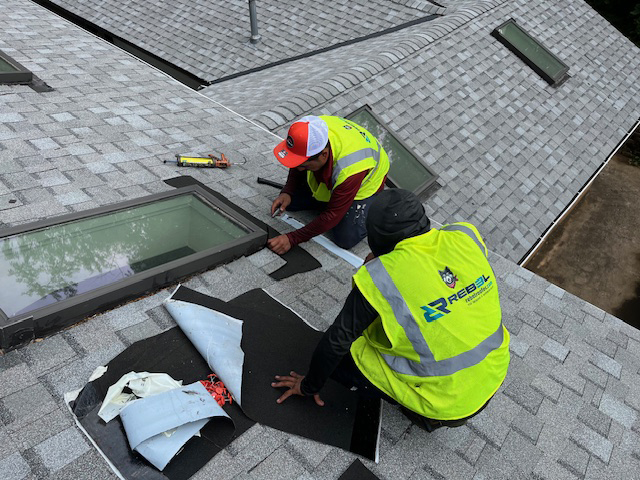
SKYLIGHTS
Skylight curb flashing, sealant condition, and the transition between the frame and roofing material are examined. Skylights are among the most commonly misflashed details in residential roofing.
PIPE BOOTS
Neoprene pipe boots degrade with UV exposure — typically failing well before the surrounding shingles. Cracked or collapsed boots are among the most common and preventable sources of active leaks.
NAIL POPS
Fasteners that back out over time break the seal beneath shingles, creating discrete but reliable entry points for water. Each field area and ridge line is checked for pop pattern and severity.

ZONE 04 – SURFACE CONDITION & SHINGLE HEALTH
BUCKLED, BLISTERED & CURLED SHINGLES
Three distinct failure signatures — each with different causes. Blistering indicates manufacturing or ventilation issues. Buckling suggests deck movement. Curling points to age, improper installation, or ventilation failure..
MOSS OR ALGAE
Biological growth traps moisture against the shingle surface, accelerating granule loss and degrading the mat beneath. Growth patterns also reveal drainage and shading conditions worth noting for long-term planning.
ROOFING LAYERS
Where accessible, the number of existing layers is assessed. Code limits vary — and layer count directly affects decking condition, system weight, and what options are available for repair or replacement.
ZONE 05 – VENTILATION
ATTIC VENTILATION
Balanced attic ventilation — intake at the soffits, exhaust at the ridge — is the single most important factor in roof longevity. Imbalance drives moisture accumulation, ice dams, and accelerated shingle aging.
VENTILATION SYSTEM
Ridge vents, box vents, power ventilators, and baffles are evaluated individually. A system that looks adequate from the outside may have blocked pathways, missing baffles, or mixing conflicts that undermine the whole.
ZONE 06 – ATTIC INTERIOR
SIGNS OF LEAKS
Active staining, dried water marks, and rust patterns on fasteners in the attic are the most reliable indicators of leak history. Interior inspection confirms what exterior inspection suspects.
ATTIC DECKING OR RAFTER DAMAGE
Structural members in the attic are examined for rot, crushing, or deformation — conditions that may require repair before a new roof system can be properly installed.
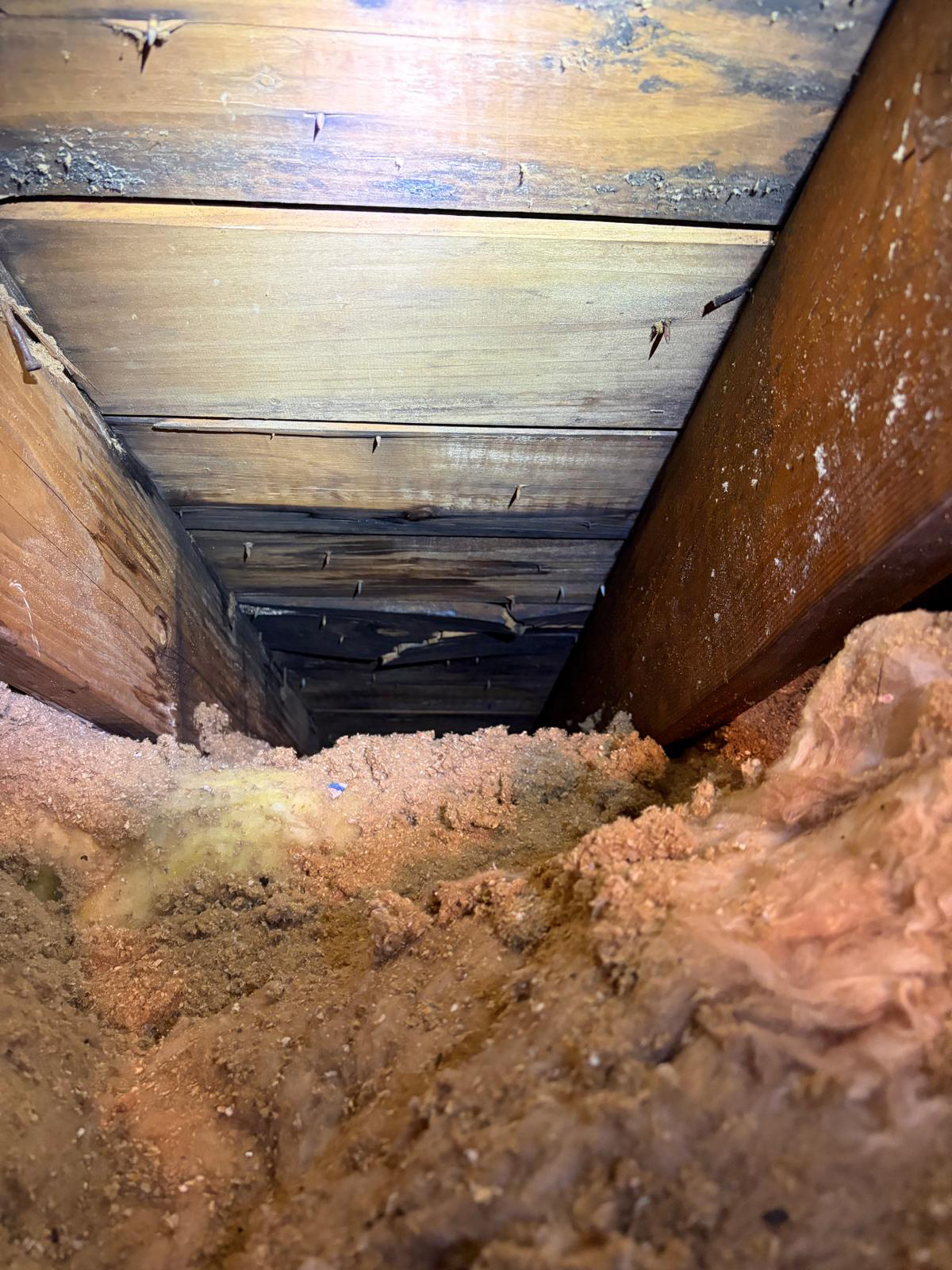
MOLD ON DECKING
Mold growth on roof decking is a direct indicator of chronic moisture — usually from inadequate ventilation, air sealing failures, or long-standing slow leaks. Identified early, the cause is addressable. Ignored, it spreads.
MOISTURE IN ATTIC
Condensation on rafters, frost patterns in winter, and damp insulation all signal moisture accumulation that’s separate from active leaks. Identified and addressed before a new roof system is installed.
GUTTER & DOWNSPOUTS
Gutters are the roof system’s exit path. Separation from fascia, inadequate slope, missing downspout extensions, and overflow patterns are documented — because water that stays near the foundation creates problems far beyond the roof.

AFTER THE INSPECTION
What You Receive
The inspection is the start of an informed conversation — not the preamble to a sales pitch.
01 – A COMPLETE WRITTEN SUMMARY
Every finding across all 21 points — documented in plain language, with photos where relevant. No jargon, no vague “we noticed some issues.” You get specifics.
03 – NO PRESSURE RECOMENDATION
If repair makes more sense than replacement, that’s what you’ll hear. If the roof has years of useful life remaining, that’s the recommendation. The goal is the right answer for your home — not the biggest job for the calendar.
02 – HONEST PRIORITIZATION
Not everything found needs immediate action. Urgent issues are separated from watch items, so you know exactly what to address now and what to monitor over the next season.
04 – A FIXED-PRICE PROPOSAL, IF WARRANTED
If work is recommended, you receive a detailed written proposal — scope, materials, timeline, and price — with no hidden line items or post-job surprises.


Andrew Morral, Chevy Chase
NEED A DOCUMENTED REPORT FOR A REAL ESTATE TRANSACTION
(Request a Certified Inspection)
Need a documented report for a real estate transaction? Listings, sales, and disclosure questions require more than a walkthrough — [Request a Certified Inspection.
COMMON QUESTIONS FREQUENTLY ASKED
What homeowners usually ask before scheduling the 21-point inspection.
Most inspections take 45–60 minutes on site. You’ll get a full walk-through of findings before we leave, plus the written report with photos within 24 hours.
No catch.
At Rebel Roofer, we’re advocates for good roofing practices and homeowner education—something we believe our industry has lost sight of over the years.
Our complimentary roof evaluation is designed to provide real value. We’ll inspect your roof, document our findings with photos, explain any concerns, and answer your questions in plain language. You’ll walk away with a better understanding of your roof’s condition and the options available to you.
We’re confident you’ll be pleased with the information, professionalism, and clarity you receive. Whether you decide to move forward with us, seek a second opinion, or do nothing at all, the decision remains entirely yours. Our goal is to earn your trust, not your signature.
Yes. Most damage that leads to a leak develops years before water shows up inside. The point of the inspection is to catch flashing, ventilation, and decking issues while they’re still cheap to fix.
A written summary covering all 21 points, photo documentation of anything flagged, and straightforward recommendations — repair, monitor, or replace — with no upsell language.
Yes. Older homes often carry layered roofing history, non-standard flashing details, or structural quirks a generic inspection misses. Every inspection is owner-conducted, so the same standard applies regardless of the house’s age or roof type.
No. You keep the report either way. If you want a second opinion or bids from other contractors, the documentation is yours to use.
Amol Triphaty, Bethesda
SCHEDULE YOUR COMPLIMENTARY EVALUATION
Owner-conducted, every time. The 21-point inspection is complimentary for homeowners seriously evaluating repair or replacement — because informed decisions make better roofs.
Rafael Huguet, Owner of Rebel Roofer